

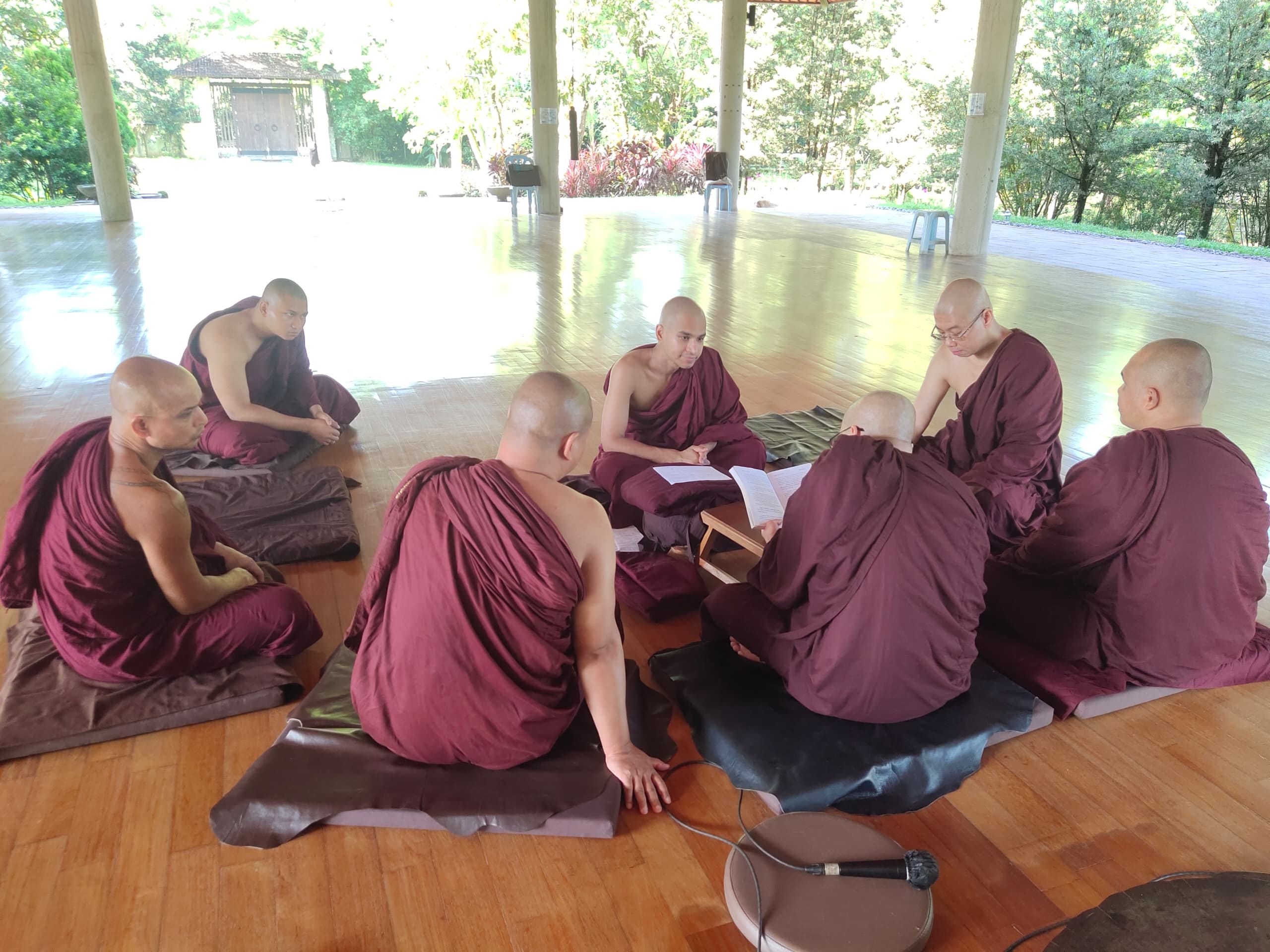
“If being a monk is like joining the military, then this place is the special forces.” This senior monk’s words sent a chill down my spine. I thought to myself, “What have I gotten myself into? Maybe I should have stayed at the old monastery…”
I had just left Dhammavijaya Meditation Centre (DMC) in Dengkil, Malaysia, and arrived at Sāsanārakkha Buddhist Sanctuary (SBS) in Taiping, Malaysia. After ordaining1 at DMC, I spent a few weeks there. Things were fine until the only English-speaking teacher left due to visa issues. With around two months left of my time as a Buddhist monk, I decided to go to SBS for the remainder. They were an international monk training center. They offered English language instruction and had a reputation for a strict training environment.
While SBS was far more challenging than DMC, I’m grateful I went there because I learned so much more as a result. Here is what I learned. Most of what I’m going to describe below comes from my time at SBS, though there was some overlap with my time at DMC.
Happiness
“Set aside a certain number of days, during which you shall be content with the scantiest and cheapest fare, with coarse and rough dress, saying to yourself the while: "Is this the condition that I feared?”
— Seneca
I realized how little I really needed to be happy. Basic food, clothing, and shelter were enough. Concerning food, as monastics, we are not allowed to eat after noon. As such, I usually only ate breakfast and lunch. We were even encouraged to try eating just one meal a day, which I accomplished on many days. Each day at 7:30 AM, we’d walk barefoot and downhill to a local meditation center. There, a group of donors laid out a buffet; we filled our bowls and carried them back up the hill. In total, we would walk around 2.5 miles (4 kilometers) round trip. The food itself was pretty delicious. I now wonder how much of the food’s deliciousness came from the food itself and how much was just my perception. I was quite hungry from fasting for around 20 hours each day.
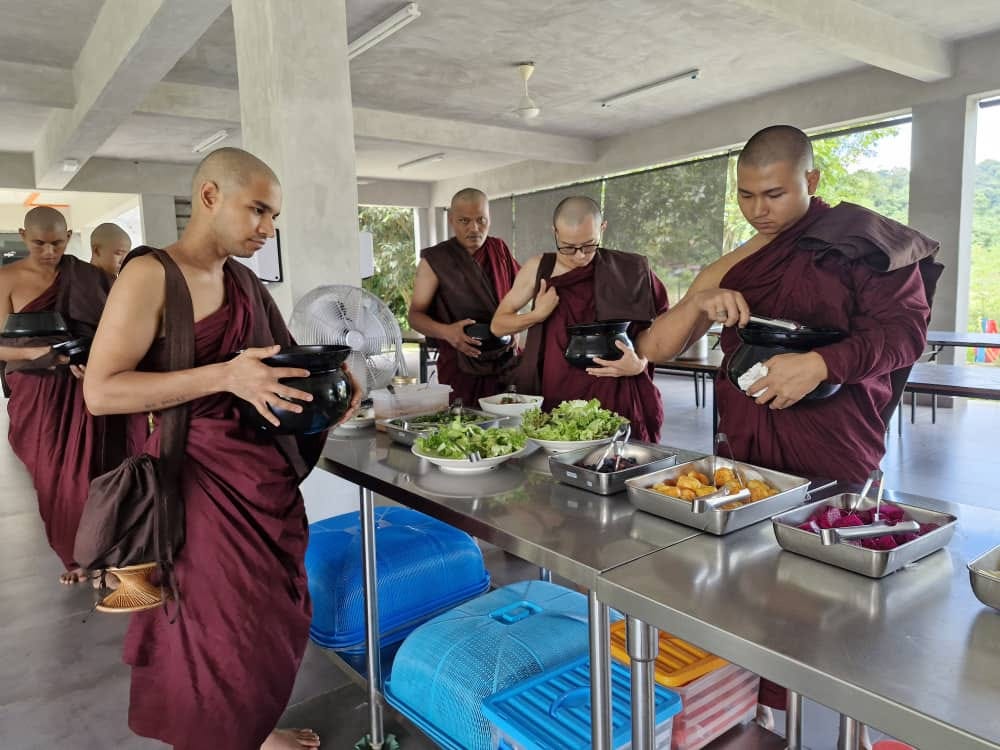
In terms of clothing, I wore the same set of robes every day; monks are only allowed to own one set. I wore a lower robe that covered me below the hips. I also had an upper robe for above the hips. When it was cold, I’d also wear a double-layered robe. At SBS, we would often only wear the lower robe and go bare-chested, as it was all just other men at the monastery. Saturdays were for washing robes. We’d borrow a lower robe from a collective pile of robes and then take our own set of robes and immerse them in boiling water. This water contained a reddish dye extracted from the bark of a tree. I’m not sure how much it actually cleaned the robes, but I suppose the boiling water sanitized them, and the dye covered up imperfections.
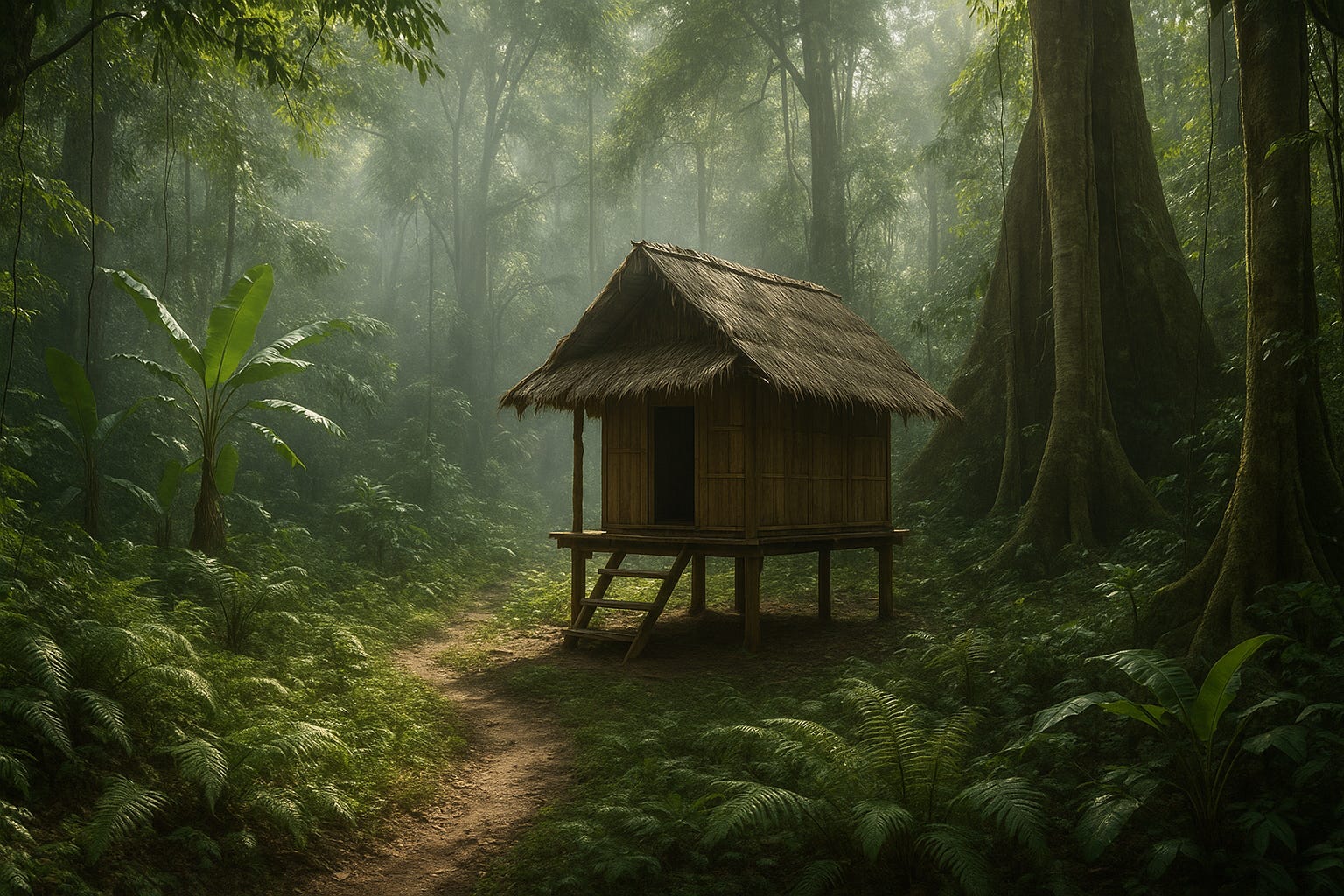
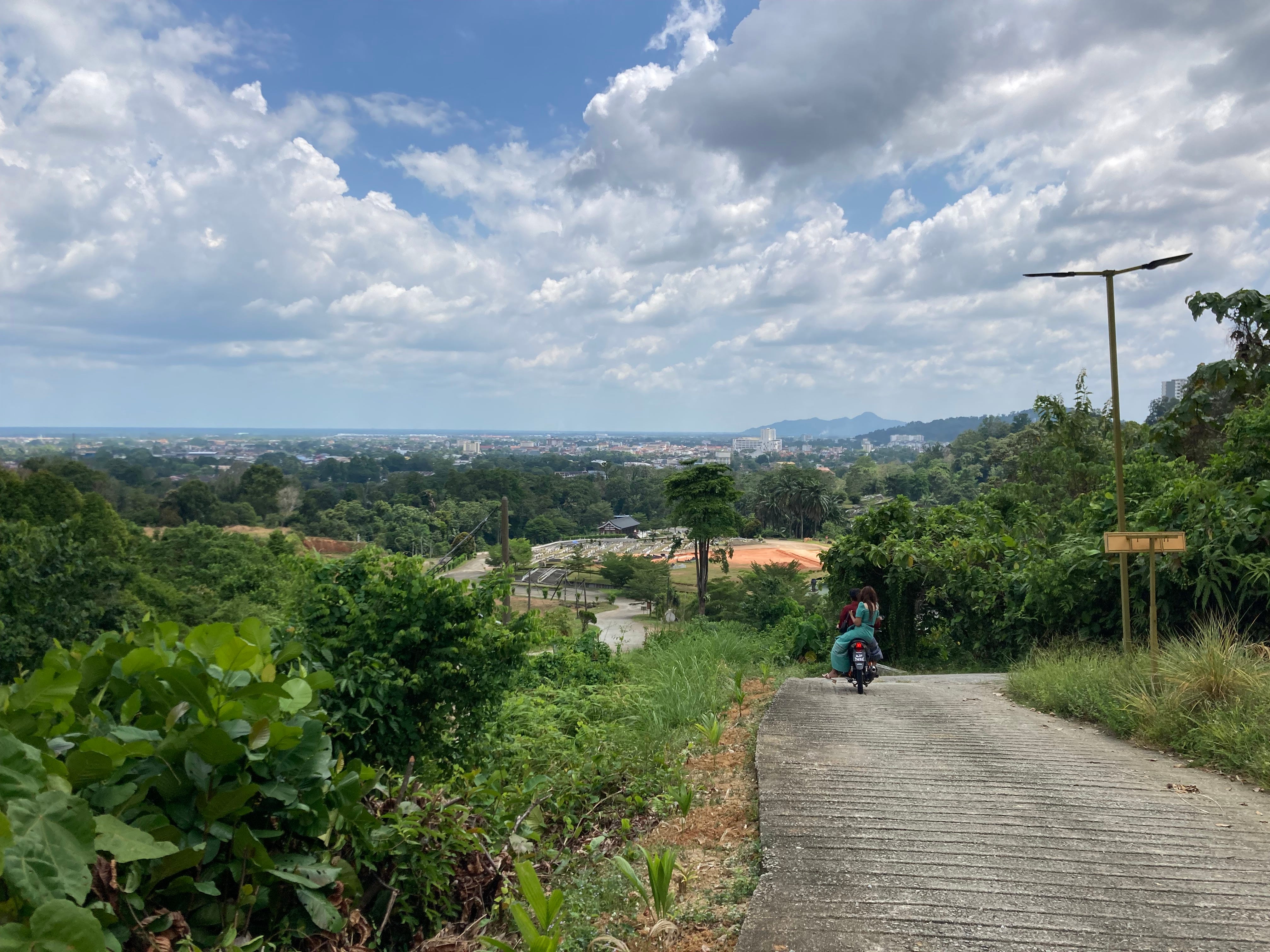
For shelter, they assigned me a small hut in the jungle called a kuṭi. My kuṭi was around 10 ft X 15 ft (3 meters X 4.5 meters) in area and 10 feet (3 meters) tall. It had electricity with lights, a fan, and some power outlets. I was glad to have insect screens, but bugs still sometimes got in. I even had a shower at the front. The shower was in the open because the kuṭi was quite deep in the jungle, so I’d often shower naked outdoors. There was a small shed with a squat-style toilet, a 4-minute walk away. While I used it initially, I later pooped right next to my kuṭi. As I was in the middle of the jungle, I noticed my poop vanish within a few days. Flies would eat it, and termites would build colonies with it. The frequent rain would also wash it away.2 For bedding, I received a yoga mat. I used a rolled-up towel as my pillow. I was surprised by how well I could sleep despite these minimal conditions. One nice perk of my kuṭi was its spot next to a tree clearing. This gave me a lovely view of the nearby city, Taiping.
I noticed something beautiful: Despite how bare my living conditions were, I was not only surviving, but even thriving. I was generally peaceful, and even at times blissful. Living in a monastery helped me stay free from porn and masturbation for three months. During that time, I found a more profound, stable happiness beyond the highs and lows of porn addiction. One night, I even slept on a concrete slab in a nearby graveyard with only my robes as sheets. I was a bit sleepy the next day, but I was fine.
Resilience
“Besides death, all failure is psychological.”
— Jocko Willink
The Buddha suggested certain ascetic practices for monks who wanted extra help with letting go of attachment to sense pleasures. One of these practices was living in a graveyard.3 There’s one right next to SBS, and I spent three non-consecutive nights there.
Why do this? There are two main benefits: accepting my mortality and building mental toughness. A classic Buddhist practice is death contemplation. There are many ways to do this practice, and here’s how I did it. Firstly, I should mention that on my last night at the graveyard, it was a new moon, so it was pitch black. As such, my flashlight proved indispensable. I walked slowly down the rows of gravestones and shone my flashlight on each. These gravestones had enamel photos of the deceased. With the light shining on the image, I would gaze into the eyes of the deceased and repeat these phrases:
I am subject to aging. Aging is unavoidable.
I am subject to sickness. Sickness is unavoidable.
I am subject to death. Death is unavoidable.
I then expanded my focus to bring to mind my loved ones. They, too, were subject to aging, sickness, and death. There will come a day when I will see them for the last time. For all I knew in that moment, I might already have seen them for the last time.
You may be thinking, “Why would I torture myself with all this negativity?” Well, as odd as this sounds, it’s actually quite freeing. For much of my life, I let fear prevent me from living authentically. When I got closer to accepting my own death and faced it directly, my other fears felt less scary. If death could come at any time, why not live each moment authentically, as if it were my last?
If death could come at any time, why not live each moment authentically, as if it were my last?
This ties into the second benefit of mental toughness. When you willingly face tough situations and overcome them, you become better at handling future challenges. When I was alone in the dark graveyard, even a tiny sound made my heart race. I’d suddenly think, “Who’s there?!” “What’s that?!” “Was that a ghost?!” My mind was very skilled at taking the tiniest noise and creating the grandest stories. It only got worse. A pack of stray dogs roamed nearby. So, whenever I heard barking, I imagined them attacking me. Some did approach me, but I always managed to walk away before they got too close.
Without these experiences, I doubt I’d have had the courage to get arrested for civil disobedience during a protest against the manufactured famine in Gaza. Spending a few hours in jail felt less scary to me than spending a night alone in a graveyard with stray dogs on the prowl.
Generosity
If sentient beings only knew, as I do, the fruit of giving and sharing, they would not eat without first giving, and the stain of stinginess would not occupy their minds. They would not eat without sharing even their last mouthful, their last morsel, so long as there was someone to receive it.
— The Buddha
During my three months as a monk, I did not spend a single dollar—the generosity of countless donors paid for all my basic needs. Most of the time, we walked to the nearby meditation center for food. Sometimes, we went door to door to beg.4 This was humbling, especially since I’ve eaten at expensive restaurants. It was also beautiful to experience. While a senior monk and I walked around town for alms, people often chased us to give us food. One time, we stopped at a restaurant. So many people offered us food that we struggled to carry it all back to the monastery. It was so moving to see how generous people can be. Seeing this was really helpful. In lay life, I read the news a lot. This gave me a warped perception that most people were greedy and only cared about themselves. I feel so grateful to have a more holistic picture now.
But the generosity I experienced was not only from lay people, but also from the monks. I feel so grateful to SBS for letting me join them at all. They usually don’t allow temporary ordinations. SBS is for those who plan to ordain for life. However, I think the abbot made an exception for me due to my unique situation: My DMC teacher’s unexpected departure.
Furthermore, I feel grateful to all the other monks there who treated me like family. Indeed, the Buddha described the community of monastics, the sangha, as a family. And while I was there, I did feel like the other monks were my fathers and brothers. This felt especially important to me as I am currently estranged from both my father and my older brother. I felt like the abbot and the older monks were role models for me in a way that I don’t have in my family. Near the end of my ordination, some monks praised me for my hard work. They said I would make a great monk if I chose to stay ordained long term. This is the sort of praise that I don’t remember getting from my own family, but I do wish I had.
But the generosity of these monks goes even beyond that. I can’t speak for everyone, but I know some monks commit to monastic life to continue the “Buddha sasana.” This term refers to the time when the Buddha’s teachings are still present in the world. The Buddha himself acknowledged there would come a day when his teachings would be lost. The main group that has kept the Buddha’s teachings alive is the community of monks and nuns. If they hadn’t dedicated their lives to preserving and sharing these teachings, we probably wouldn’t have them today, 2,500 years later. In my eyes, their greatest act of generosity is their preservation and transmission of these priceless teachings.
Saying Goodbye
“Are you having second thoughts?” the abbot playfully asked me. “Yes, to be honest, part of me wants to disrobe5 and go back to New York City, but another part of me wants to stay.”
The decision to leave was a tough one. Being a monk can supercharge a Dharma6 practice. As a monk, your main job is spiritual growth,7 so three hours of meditation and two of Dharma study8 fit easily, daily. In lay life, even thirty minutes for meditation can be hard to find.
But, I wasn’t ready to give up lay life. Many lay people, like Joseph Goldstein and Shaila Catherine, have deep meditation practices. I wanted to see if I could make that happen for myself too. And so, ultimately, I decided to disrobe. While I may no longer be a monk, my memories of this time still feel close to me. And to the best of my ability, I will live by the lessons these monks taught me. I returned to lay life, but not unchanged. As T.S. Eliot wrote:
We shall not cease from exploration
And the end of all our exploring
Will be to arrive where we started
And know the place for the first time.
If you are considering temporary ordination, then I encourage you to give it a try! It will be a worthwhile experience where you will learn a lot. If that is too big a leap, you can also start by staying at a monastery as a layperson. In either case, I should warn you: you may not want to leave 😉
P.S. I’m offering donation-based, one-on-one meditation instruction! You can learn more here. 🙏🏽
To ordain means to become a monastic. Ordination is the noun form.
Taiping is actually one of the wettest places in the world. Taiping gets over 2700 mm of rain each year. This puts it above 90% of all countries on earth.
To clarify, the Buddha actually said charnel grounds. Graveyards are usually neat, with bodies buried carefully. In contrast, charnel grounds are chaotic, and bodies often decompose in the open. Animals would also come to feed on the corpses. As charnel grounds are rarer nowadays, graveyards are the next best thing.
To clarify, monks technically don’t beg in the traditional sense, as they don’t verbally ask for anything. They stand in silence in front of the door of a home or restaurant and wait patiently. If someone decides to give them food on their own initiative, they receive it. If no one offers anything, they silently walk to the next door. Also, monks are not allowed to use money, so they refuse any monetary donations.
Disrobing is the term used when referring to the act of giving up monastic life and returning to lay life.
I say Dharma here as opposed to meditation because the Buddha’s teaching actually goes beyond just meditation. For example, ethics is a big focus as well.
This depends on which monastery you are at. Some monasteries focus more on work. I’ve heard this is true at Ajahn Chah branch monasteries.
I primarily studied Bhikkhu Anālayo’s texts on meditation practice and translations of the Pali canon, the main holy text of Theravada Buddhism.